


The mid sixties saw a resurgence of the grand scale historical epic around East Europe. As King Vidor’s War and Peace adaptation prompted, in the decade’s early years, Mosfilm to develop a large scale epic presentation of the film as an act of defiance against the western Hollywood industry, all the other countries of the block seemed to have caught what was in the air. In Hungary, Várkonyi’s literary classic adaptations — also primarily set around the napoleonic wars, like Tolstoj’s giant novel — lead to Jancsó’s countering reaction, prompting him to direct a historical film that would defy the artifices of the reenactment and the mise-en-scène. That ended up being The Round-Up (1965). The same year saw, coincidentally, the release of Andrzej Wajda’s own large scale historical film, The Ashes, also set amidst the napoleonic wars, and adapted from Stefan Żeromski’s novel.
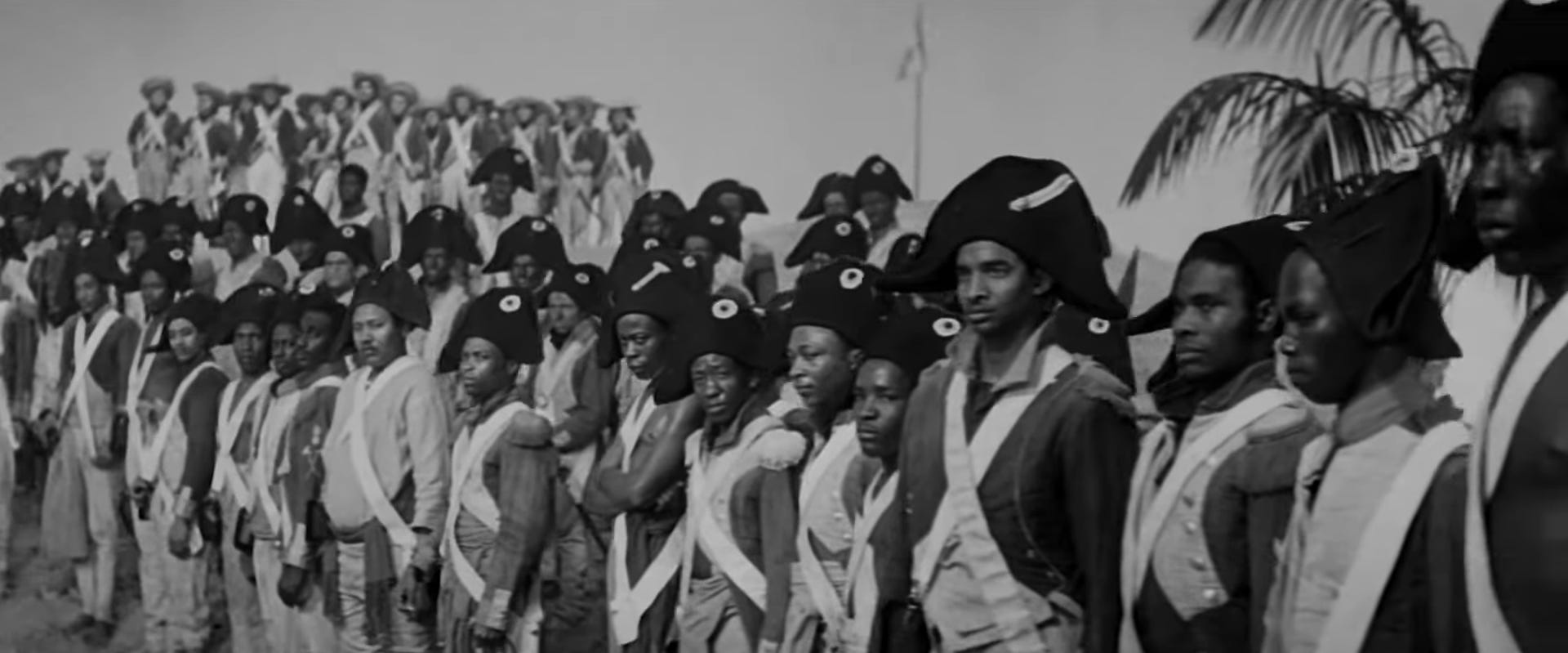
Wajda’s film is considered a faithful adaptation of the novel, meaning that its merit, thematically, is to have been observant in evoking the same intentions of Żeromski’s novel. The historical epic, similarly to Tolstoj’s grand work, details the relationship between the napoleonic wars and the polish people, involved in the conflicts through a polish chivalry division that has been present to several of Napoleon’s major campaigns. The Ashes particularly presents some of the bloodiest events, such as the repression of the slave revolt in Cuba, or the particularly brutal events of the siege of Saragossa, seen through the experiences of two protagonists, the peasant-turned-nobleman Rafał and his eventual friend, Krzysztof.
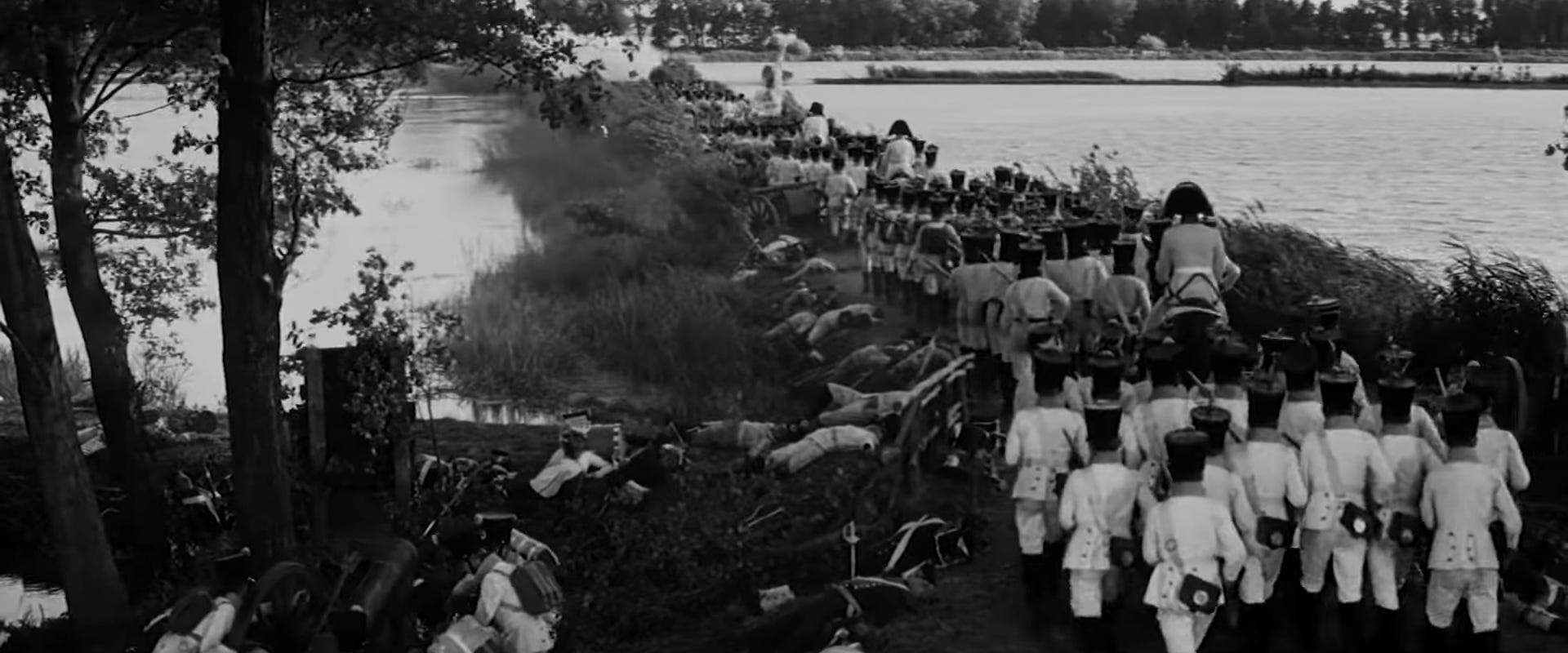
Amidst that debate of its time on the depiction of the historical genre in cinema, Wajda’s film is pretty much placed in the middle: under a guise of a lyrical form and the grand scale battle sequences, the film portrays with detailed visuals the brutality of the depicted events. It is most definitely one of the rare occasions for a film of its time that sexual violence perpetrated during warfare is problematised — a famous precedent is Vittorio de Sica’s La Ciociara (1960), in the context of the Second World War. The Ashes demystifies the often praised heroism of the polish division under the Napoleonic campaigns.
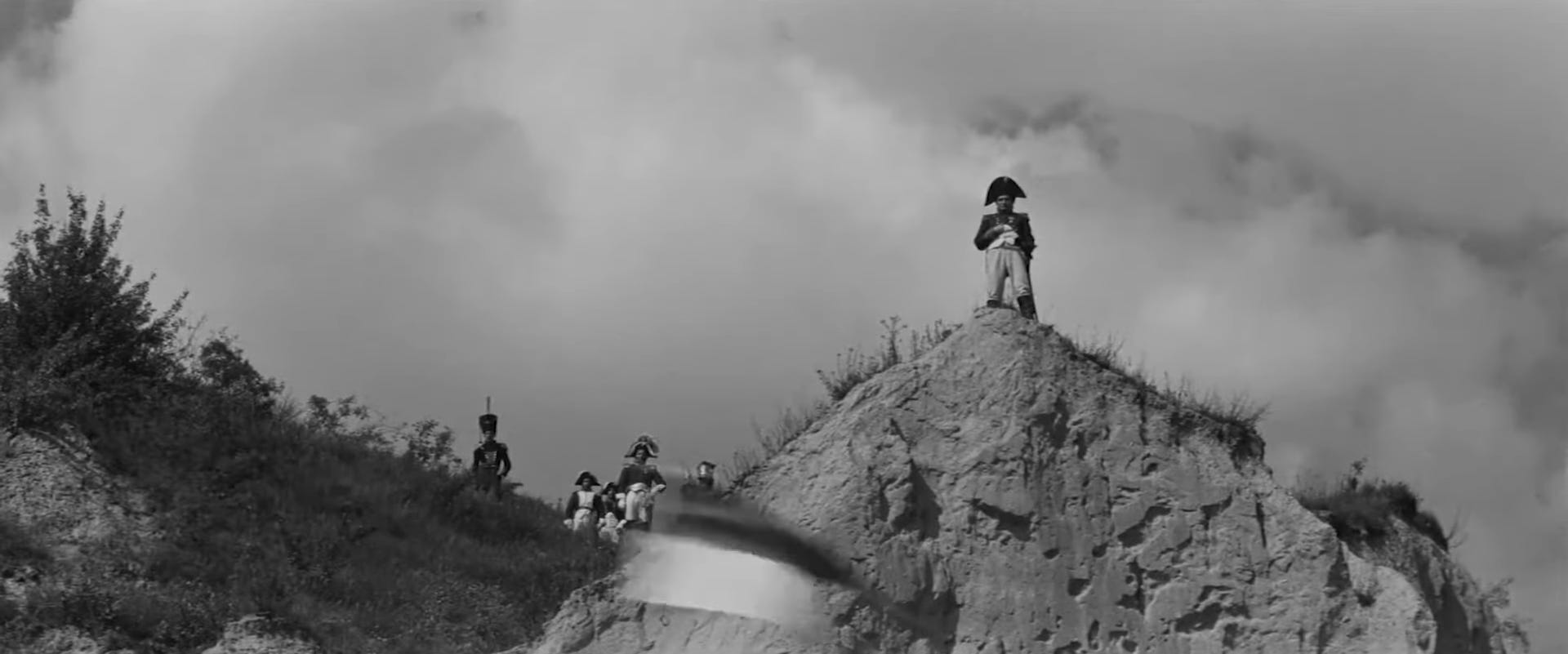
Napoleon’s character has a specific allure, appearing in rare sequences. His charismatic appearance sparks a strong emotional reaction from the lead characters, who are almost bewitched by the promises his persona’s simple appearance represents, inspired to enlist into a warfare that keeps exploiting and discarding them. Few other films have captured the “Napoleon effect”, his inexplicable power in influencing the masses to follow him in disastrous or otherwise lethal battles across Europe. Krzysztof sees in Napoleon the man who can grant freedom to the polish people, even if that means fighting in foreign lands for wars that have nothing to do with Poland.
With more emphasis than Ashes and Diamonds, in The Ashes ambiguity among the various polish independentist ideologies is present due to a imposing class system: traditionally polish noblemen, who seemingly vouch for a Poland free from a tyrannical habsburg rule, show particular cruelty towards the polish peasants. That is the mechanism that prevents Wajda’s film from fall into nationalistic ideologies: all factions appear constantly deeply flawed, far from a truthful sense of freedom.
The giant epic not only is immensely long, but immensely large. Nothing in comparison to Bondarchuk’s upcoming War and Peace, the film still depicts the napoleonic warfare on a relatively grand scale, in a film that lasts over three hours. With Bondarchuk’s film almost being too far from the action, The Ashes manages to show the violence in more detail. Curiously, the bulk of the events depicted in the film fit almost perfectly in a chronological sequence between Abel Gance’s Napoleon and Bondarchuk’s War and Peace, making with The Ashes an unexpected trilogy: Napoleon focuses on the ruler’s rise before the italian campaign, The Ashes starts with the Italian campaign and ends with a montage that touches the russian campaign, and then Bondarchuk’s film mostly details the russian campaign. The way each film represent Napoleon himself and the ideologies of the Napoleonic Wars are also fittingly in conversation.
The Ashes has become one of the highest domestically grossing films of polish cinema, and is most definitely the film by Andrzej Wajda that best fits in the description of a grand scale historical epic.