


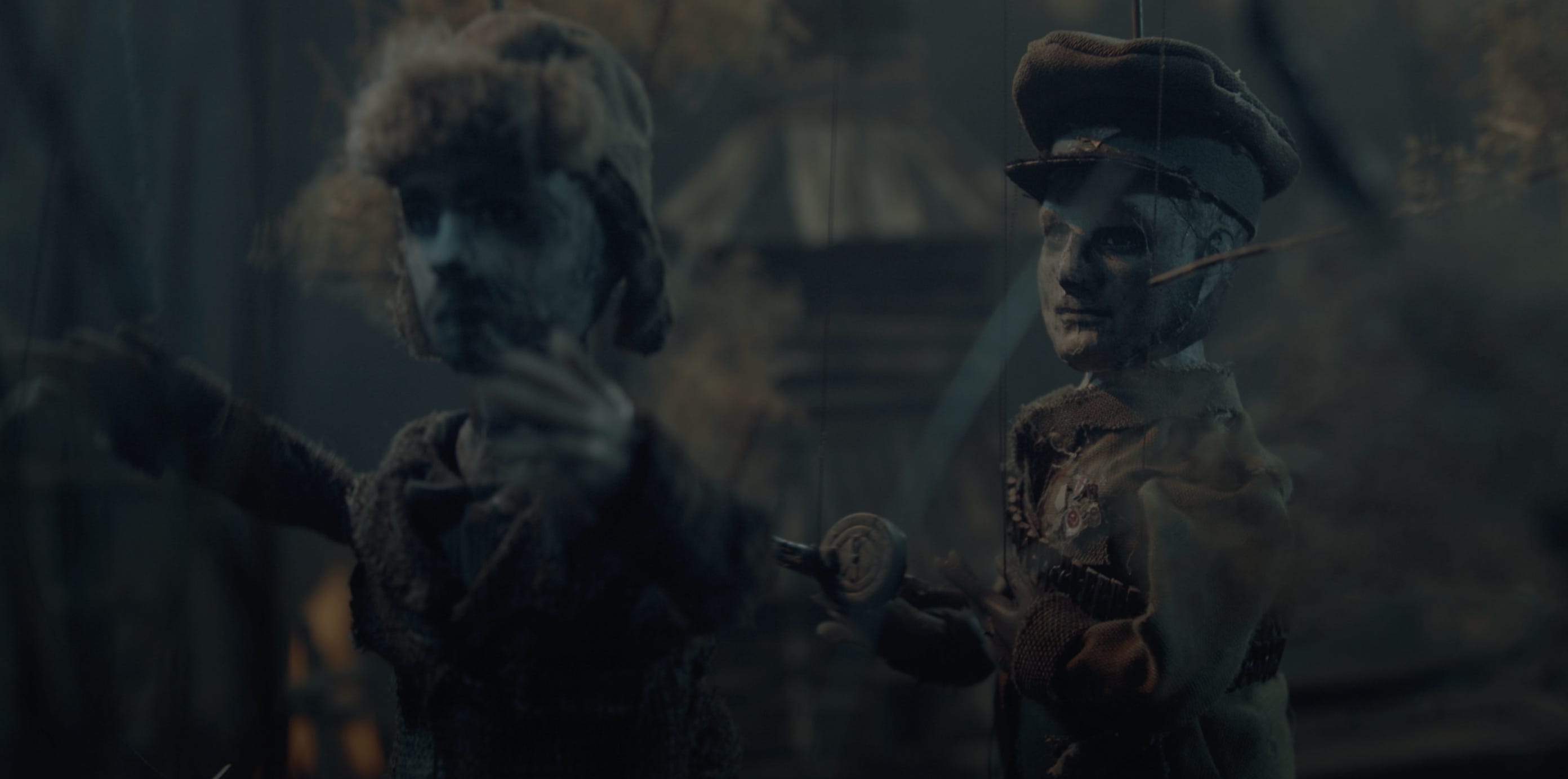
There are concepts that should work perfectly in theory, but cannot withstand the test of the screen, much like there are topics that deserve to be tackled with utmost respect. Gejza Dezorz’s choice in his feature film Dukla reflects this difficulty: depicting a queer romance on the backdrop of WWII, using marionettes, can be described, at best, as risky. The result, unfortunately, could not reward its risk taking.
As soon as the tediously long expositional text introduction finally finishes spoonfeeding commonly known facts about the historical context of the Second World War, it becomes obvious that the use of the marionettes to depict Dukla’s subject matter has the role of enhancing the sense of the grotesque. In the opening, a german girl chants and cheers at a television depicting Nazi propaganda. Soon, the narrative shifts to the two protagonists: (laughably named) german officer Kurt Schreck, the voicing narrator of the film, who writes to his wife Gretchen his impressions of the lands inhabited by the “slavic untermensch” that is the Dukla Pass, where he is stationed in 1944, and the Roma man Dylo, who was witnessed the extermination of the Roma community by the Arrow Cross regime in Hungary.
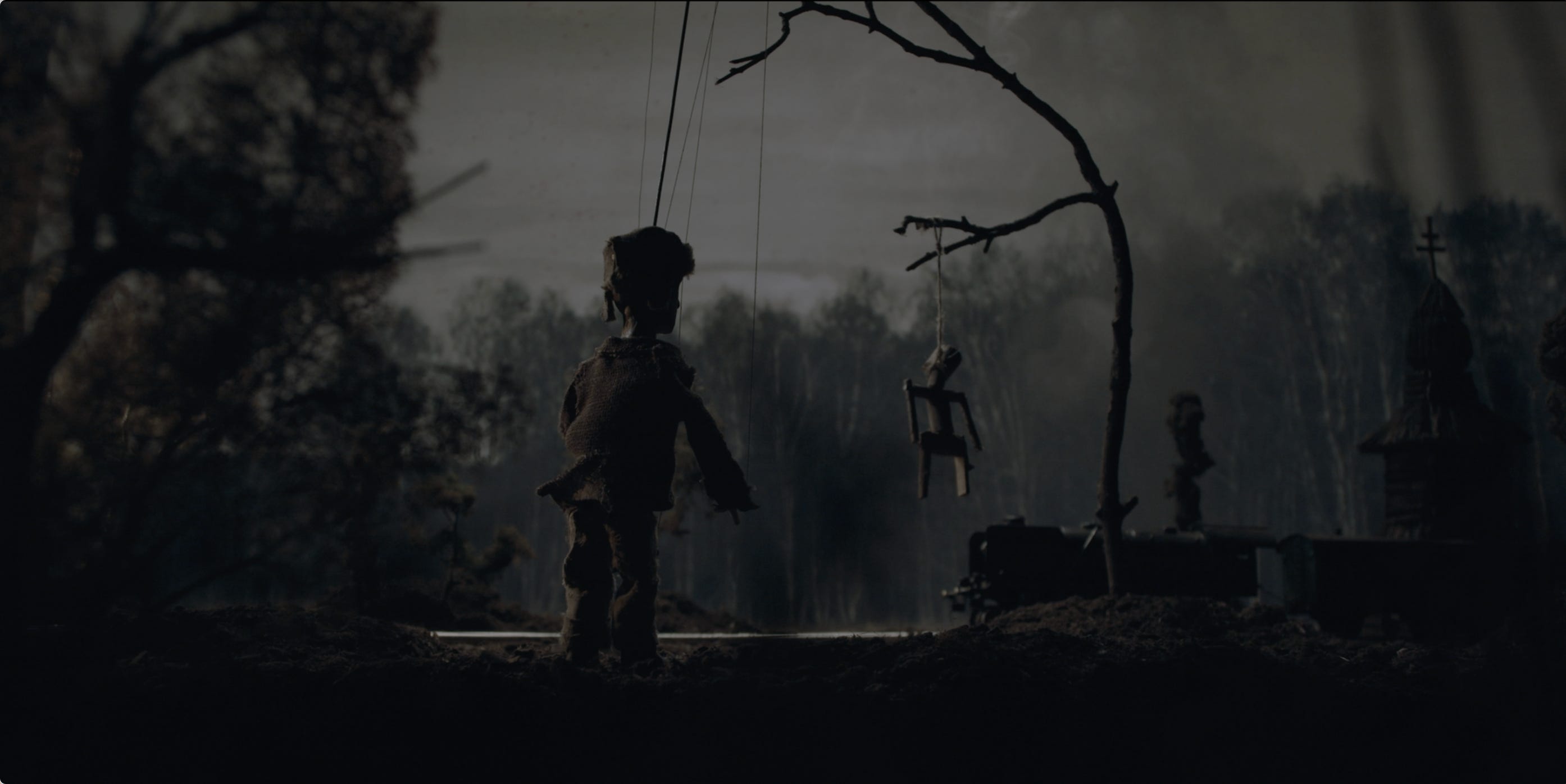
The two men cross path multiple times, while the first actively participates in the violence against civilians, the second endures the aggression both from the german side and the russian one. In the first forty-seven minutes of the film, Dukla composes a disturbing image of continuous massacres, violence of physical and sexual nature, almost a bad imitation of a Bosch painting, for the sense of grotesque leads only to a nauseating sensation that the film, in its entirety, is “playing” around a series of themes that are too mature for its form. The acts of violence are overly exaggerated, sometimes rivaling Come and See by Klimov in their degradedness, but the result is that the film reads as what is commonly described as “violence porn”, or pure sadism. The intentionally semi-childish voices only worsen this sensation. The juxtaposition of a queer romance in the last fifteen minutes to a whole series of violent acts (some of which featuring homosexual rape) only further weighs down the imbalance.
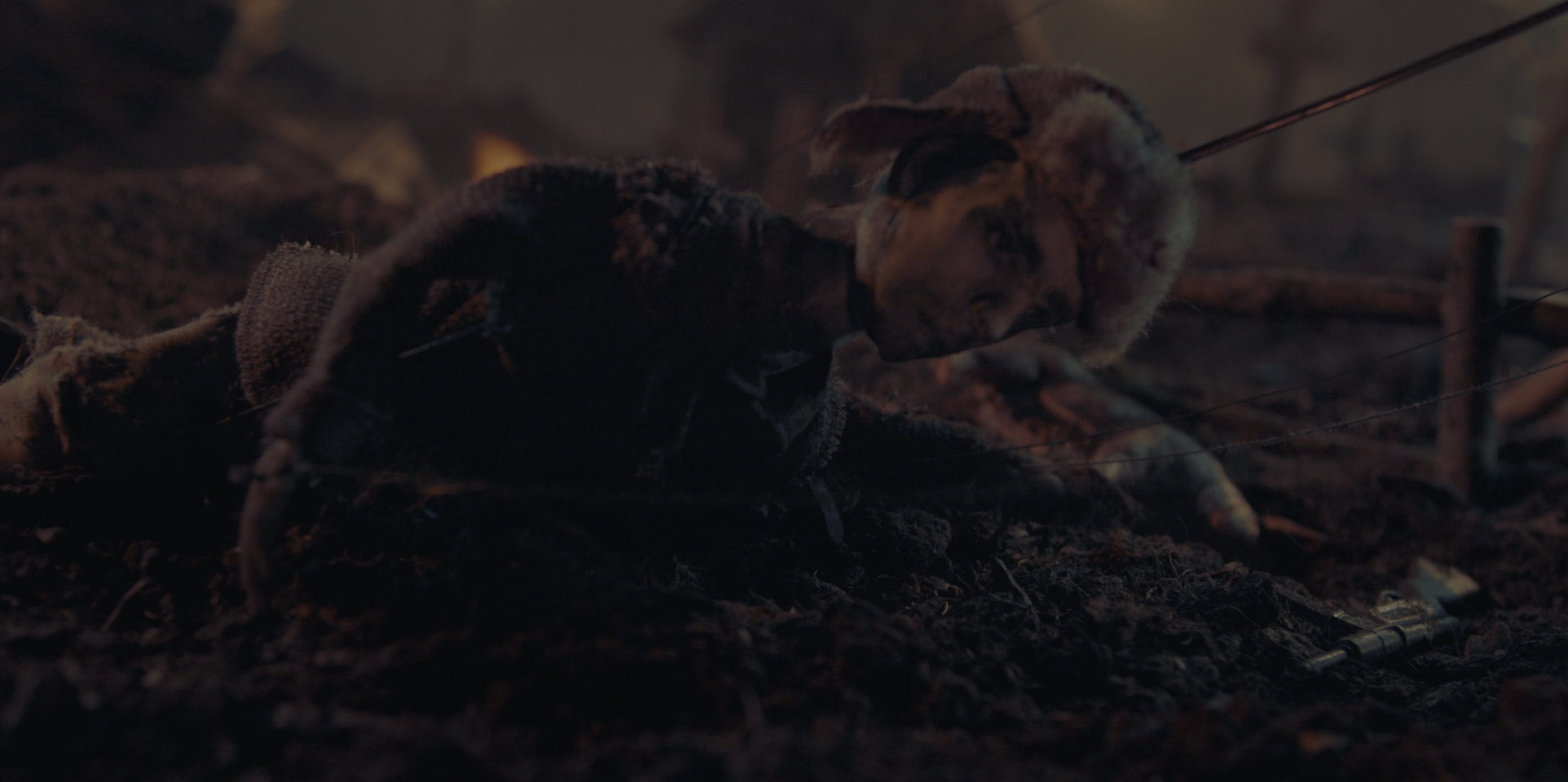
What further makes Dukla harder to accept as a film is the lack of tact with which it addresses its topic. With specific choices, it ends up supporting the very ideology it should not. For instance, the local inhabitants of slavic descent are depicted as stylized wooden figures, reduced to their ethnical cultural background, as opposed to the more human-formed germans, russians and co-protagonist Dylo. Additionally, the excessive voice given to Kurt, the attempt at humanising a character that, even after after the blossoming of the queer romance, is depicted to be an active participant of the holocaust, comes off as sympathy, especially when the soviet faction is generally depicted negatively.
There are, rarely, glimpses of a film that perhaps could have had a sense of catharsis: in certain sequences Dylo experiences some sort of mystical moments, depicted in a surreal tone, something that, with further development (and perhaps more maturity in addressing graphic violence) could have turned Dukla in a film of some decenct.
RATING: 0.5/5