


With today’s saturation of TV shows and miniseries, the novelty of Dekalog might appear amiss. The concept of a film auteur directing a serialized project not destined for a cinema is something very common, as it is to stumble into tv shows presented at film festivals. In 1989, the fact that Kieslowski had created a cinematic work that was destined for consumption at home, and that this was premiered, for the first time, at a Film Festival, was something unique, that launched the form of the TV show as something more than mere media for consumption.
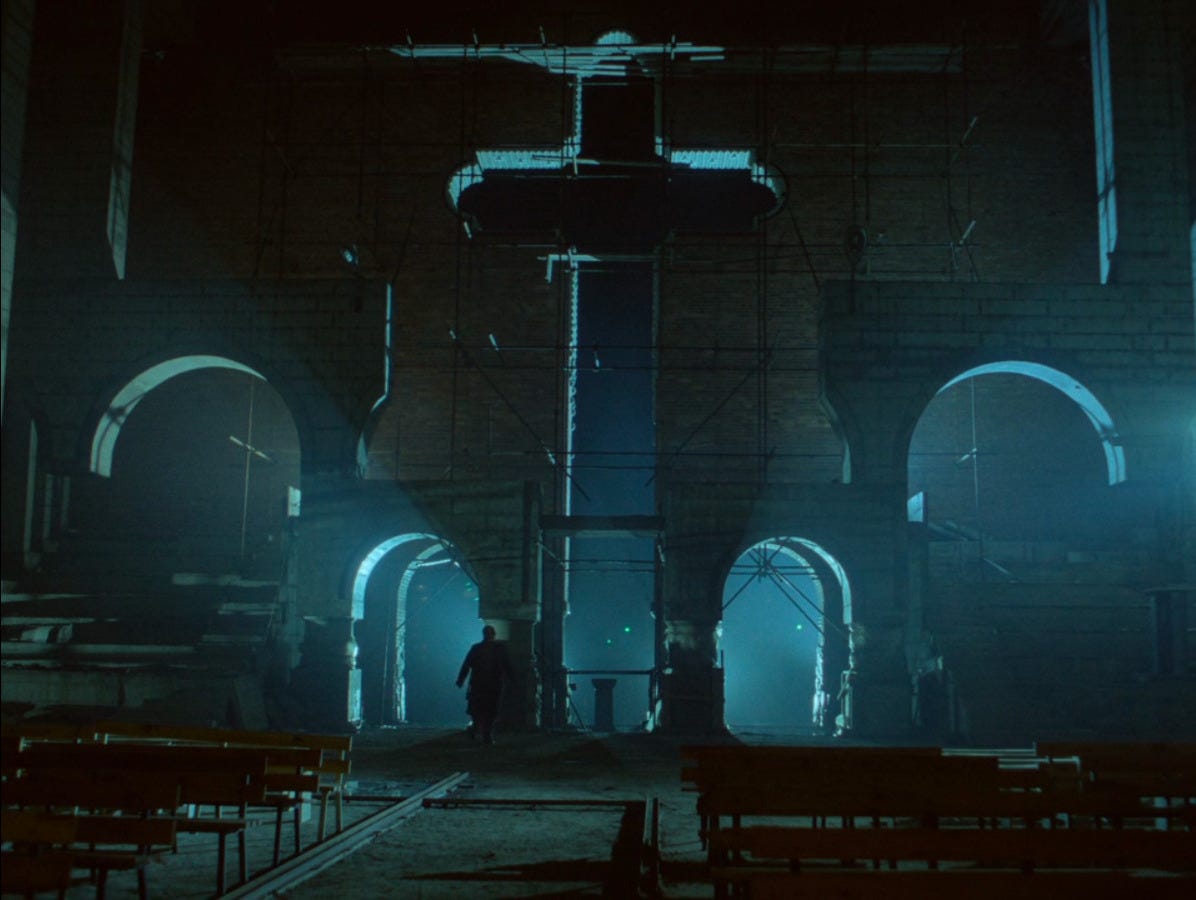
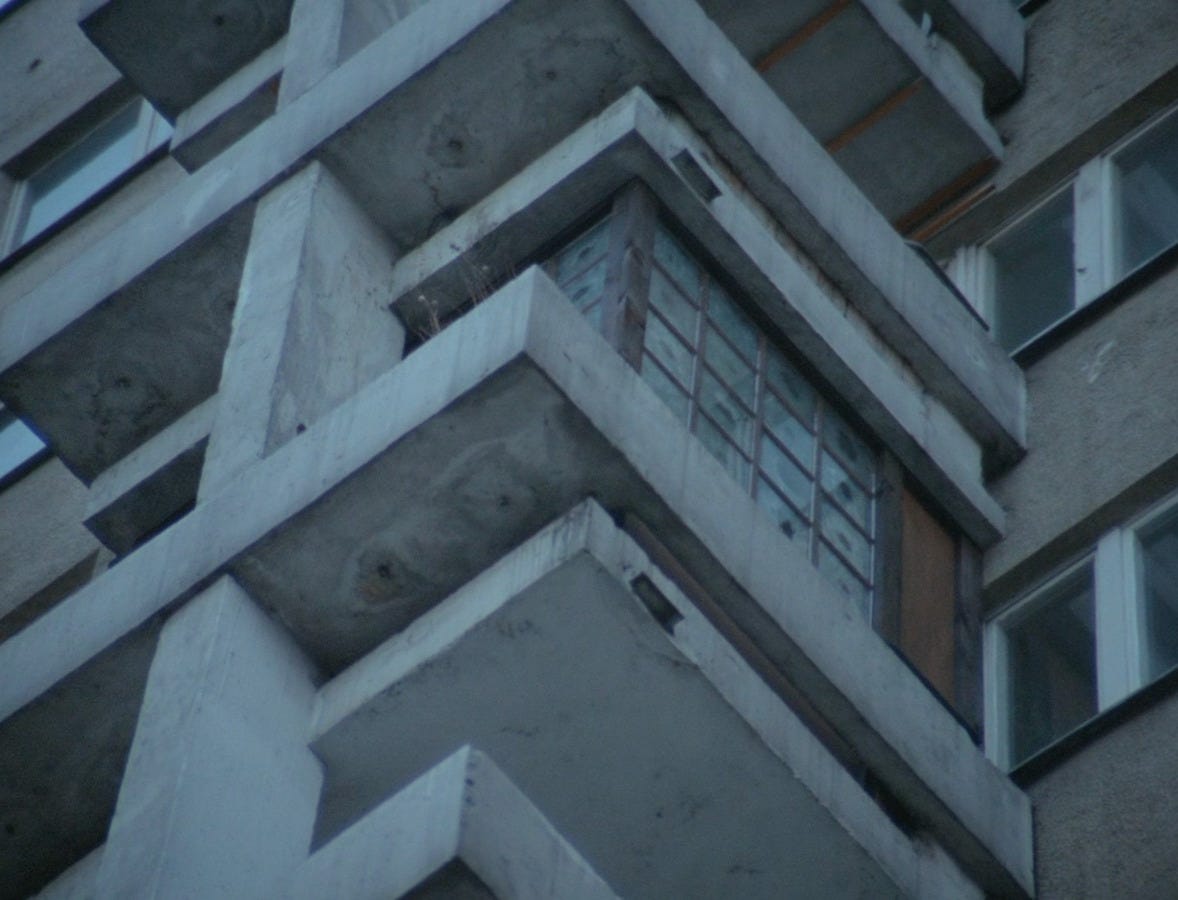
The ambition of Dekalog is also in its form: ten episodes, each centered on a specific story, but in the same microcosm, set in the same residential agglomerate in Warsaw. It is not merely an excuse to allow cameos of each characters to appear sporadically in other episodes than their own. The skeletal shapes of the buildings construct an aesthetic of modern desolation, without any grandeur — afterall, it is a very common iconography in the soviet sphere — an urban wasteland, an ideal container of stories.
Dekalog might be reduced to an anthology, but it does not share the limits of the anthological structure exactly because of its overall unity: it is not ten separated stories, each in their own bubble, it is ten stories in one, larger bubble which is existence itself. The sporadic appearance of characters from previous or later episodes serves as a reminder of this unitary scope — all these stories happen to neighbours, in the same world. Very few films can achieve this sense of universality. What further aids in Dekalog’s universal nature is, of course, its structural adherence to the Ten Comandaments.
The hebrew ten comandaments, then inherited by the christian world in a different form, have been for millennia the cornerstone of society, becoming ten dogmas universally recognised as holy, in the west. That would not mean that, for millennia, mankind has been religiously following these comandaments. By recontextualising them in his contemporary time, Kieslowski examines in what way these dogmas influence the human perception of taboo, even if these rules are continuously broken. With utter attention, he identifies the modern equivalent of the more outdated of these rules, aptly identifying in the reliance on technology a new form of idolatry. What really is striking about the 1989 tv show is how several of the contexts and situations have hardly became outdated still today: Dekalog I’s protagonist talks about the future prospects of AI in terms completely identical to today’s discourse, the morbous, stalker-leveled obsession of Tomek or Jacek’s whole journey in Dekalog VI and V are as much as descriptive of the fragility of the toxic masculine ego as if they were filmed today, Dekalog II’s dilemma is as a modern take on the right of a woman to choose for herself about an abortion as it would be today — in fact, curiously, this right is never even questioned in Dekalog II, it is taken for granted (perhaps, we’re even regressing as a society).
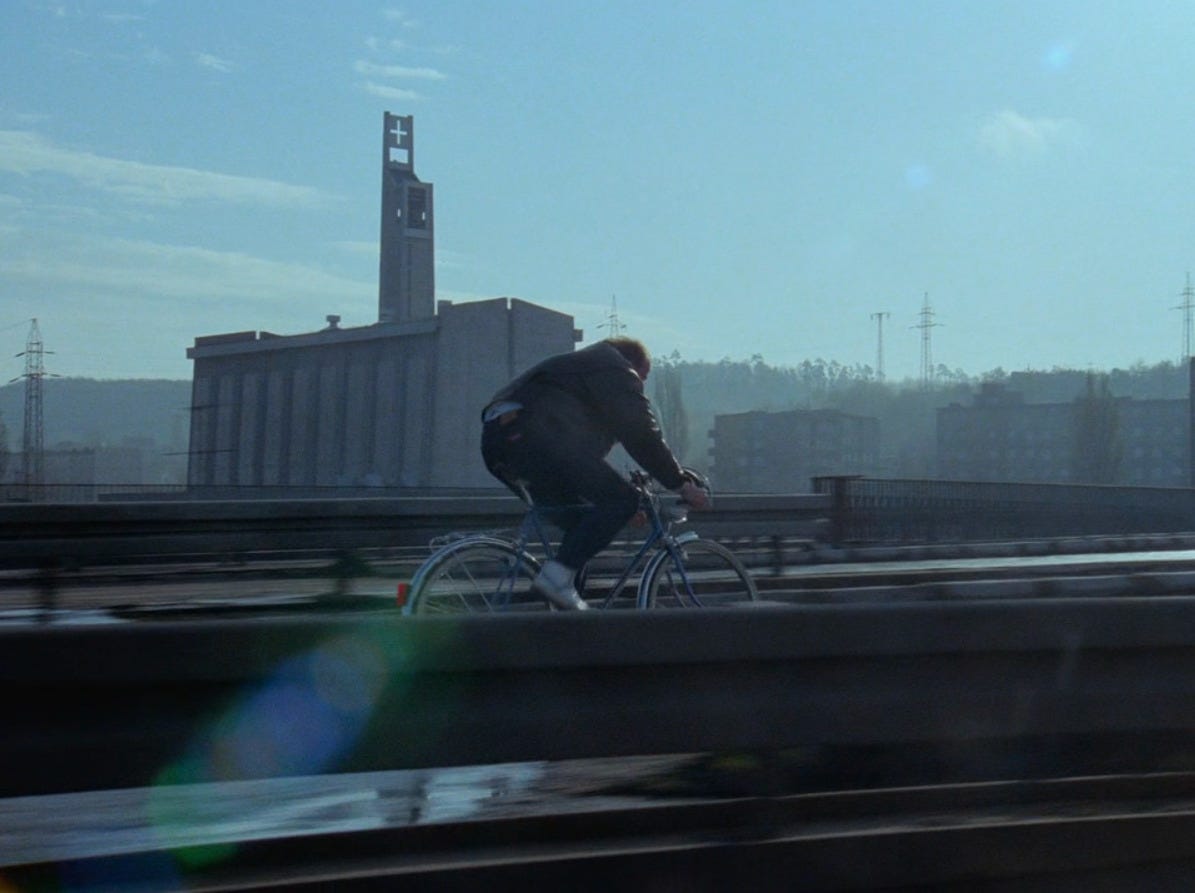
Perhaps the most interesting aspect of Dekalog is its mystery. Not only in the form of certain scenes, such as the rather cryptic conclusion of Dekalog II or weird actions such as the repeated “ice eating” between Dekalog I and Dekalog VI, but more relevantly, the character performed by Arthur Barcis, the silent observer that continuously changes in its social role but that always encounters the protagonists at specific points — usually, the turning points that end up determining the outcome. His presence is open to interpretations of all sorts. Easily, he could be a divine witness, perhaps an angel, perhaps the embodiment of God himself, even if Kieslowski himself is a convinced atheist.
Kieslowski, perhaps inadvertently, has achieved an universality that transcends time and space, that still today remains relevant as it was in 1989.
-
Original title: Dekalog
Directed by: Krysztof Kieslowski
Length: 570 min. (10x57 min.)
Country: Poland
Year: 1989
Availability: Criterion Channel, Arrow Boxset